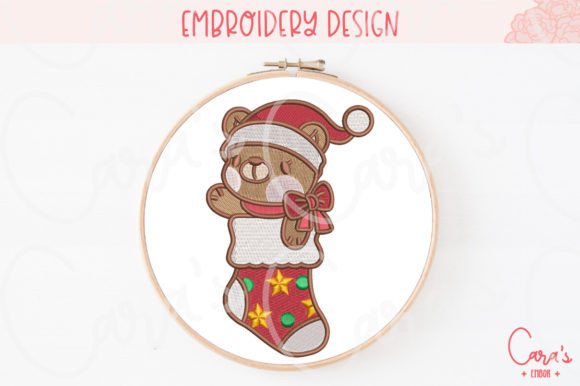
Hoza the Bear Christmas: A Designer’s Review
As an embroidery designer who has spent countless weekends behind a craft fair table, I have learned that not every design translates into a bestseller. Some look beautiful on a screen but vanish in a crowded booth. Others are so complex they eat up production time, killing your profit margin. When I first pulled up Hoza the Bear Christmas, I was looking for that sweet spot between visual charm and production efficiency. This machine embroidery design promises versatility, claiming to work on everything from home decor to accessories. But does it hold up under the scrutiny of a busy holiday market? Let’s break it down from the perspective of someone who needs to sell finished products, not just admire digital art.
First Impressions: The Vibe of Hoza
The immediate feeling I get from Hoza the Bear Christmas is one of cozy, rustic festivity. It doesn’t scream "modern minimalism," nor does it feel overly ornate or Victorian. Instead, it lands firmly in the category of approachable, heartwarming holiday cheer. For a craft fair seller, this is crucial. You want a design that feels like a hug. The title suggests a character-driven motif, likely featuring a bear in a seasonal context. This appeals to a broad demographic: parents buying for children, grandparents looking for traditional touches, and young adults seeking that trendy "cottagecore" aesthetic.
In a sea of generic snowflakes and rigid geometric stars, a character like Hoza stands out because it has personality. It feels soft and decorative, which aligns perfectly with the tactile nature of handmade goods. When a customer walks past your booth, their eye is drawn to faces and familiar shapes. A bear is instantly recognizable and emotionally resonant, making it a strong candidate for impulse buys.
Product Applications: Where Does It Shine?
The description mentions trying this amazing design on home decor, clothes, accessories, and bedsheets. As a producer, I need to be more specific. Not every surface is created equal. Here is how I would strategically deploy Hoza the Bear Christmas to maximize sales.
- Tote Bags and Market Bags: This is arguably the strongest application. A canvas tote with a central embroidered bear becomes an instant tote bag design staple. It is practical, visible, and serves as a walking advertisement for your brand. The flat surface of a tote allows the embroidery to lie flat without distortion.
- Tea Towels and Kitchen Linens: Holiday kitchenware sells incredibly well in December. Using this as a tea towel embroidery piece adds value to a simple linen towel. However, you must be mindful of the fabric texture. Terry cloth can swallow small details, so this design likely performs better on smooth flour sack towels or structured cotton blends.
- Aprons: An apron embroidery project using Hoza creates a perfect gift for the hostess or the home cook. Placing the design on the bib or the lower pocket creates a focal point that isn't too overwhelming. It turns a utility item into a keepsake.
- Embroidered Patches: If the file size permits, turning this into an embroidered patch is a smart move for inventory management. Patches are low-commitment purchases for customers and easy for you to produce in batches. They can be ironed onto jackets, hats, or bags later.
- Pillow Covers: For home decor, a throw pillow featuring Hoza adds a touch of whimsy. Ensure you use a heavy-duty needle and appropriate stabilizer to prevent puckering on the softer fabrics often used for pillows.
Production Practicality and Batch Selling
For the Etsy seller or the weekend warrior, time is money. The key question with any digital embroidery file is: how fast can I hoop, stitch, and unhoop? While I do not have the exact stitch count for Hoza the Bear Christmas in front of me, the description implies it is suitable for various items. This suggests a moderate density. If the design is too dense, it will take hours to stitch and may stiffen the fabric uncomfortably. If it is too sparse, it might look cheap.
I recommend running a test stitch on scrap fabric immediately. Check the stitch density. If you see gaps or pull-outs, adjust your tension. For a craft fair product, consistency is vital. You cannot sell one item that looks crisp and another that looks messy. This design needs to be repeatable. If it requires constant trimming of jump stitches or frequent thread breaks, it is not ready for prime time. Aim for a design that runs cleanly so you can produce ten units in the time it takes to produce three complicated ones.
Visual Appeal and Photography
In the online world, your printable mockup or product photo is everything. Hoza the Bear Christmas likely features distinct thread colors that pop against neutral backgrounds. Think cream, navy, forest green, or deep red. High contrast helps the design read clearly in thumbnail images on Etsy or Instagram. When photographing your finished product, ensure the lighting highlights the texture of the threads. The sheen of rayon or the matte finish of cotton can add depth to the bear’s features, enhancing the perceived quality of the handmade product.
Careful-Use Notes and Technical Considerations
Even the best designs have pitfalls. Here are specific scenarios where you need to exercise caution with Hoza the Bear Christmas:
- Curved Surfaces: Embroidering on caps or curved pouches requires experience. If the design is wide, it may distort on a curved seam. Always use a cap frame and test on a similar curve before committing to final stock.
- Dark Fabrics: If you plan to stitch on black or navy, ensure the design includes enough light-colored threads to maintain visibility. You may need to add an underlay or use a lighter backing fabric to prevent the dark base from showing through sparse areas.
- Small Lettering: If the design includes text, check its legibility at smaller sizes. Tiny lettering often merges together after washing. If the text is integral to the design, consider resizing the entire motif to ensure clarity.
- Stabilizer Selection: Do not skimp here. For stretchy fabrics like t-shirts or lightweight totes, use a cut-away stabilizer. For woven fabrics like tea towels, a tear-away might suffice, but test first. The right stabilizer ensures the design remains crisp and does not pucker over time.
Maximizing Value for Your Small Shop
Ultimately, Hoza the Bear Christmas is more than just a pattern; it is a tool for building your brand. When used consistently across different items—towels, bags, and patches—it creates a cohesive collection. This brand consistency helps customers recognize your style. It transforms individual items into a curated small shop product line.
Before you list this as a commercial embroidery item, verify the license. Most designers allow you to sell physical finished goods, but restrictions vary. Confirm that you have the rights to use this design asset for commercial purposes. Once confirmed, create a variety of mockups. Show the bear on a mug, a blanket, and a stocking. Help your customers visualize the versatility.
In conclusion, Hoza the Bear Christmas offers the warmth and charm necessary for successful holiday sales. By focusing on high-visibility products like totes and towels, managing your production efficiency, and paying attention to technical details like stabilizer and thread contrast, you can turn this single design into a profitable pillar of your holiday inventory. Remember, the goal is not just to stitch a bear, but to stitch a product that someone wants to take home and cherish. Test, refine, and let Hoza work for your business.